


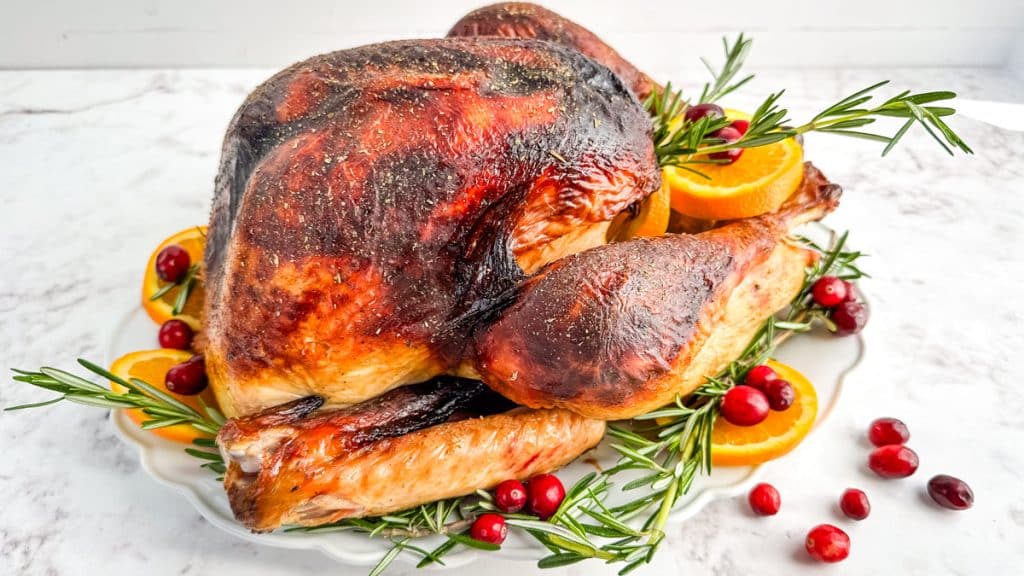
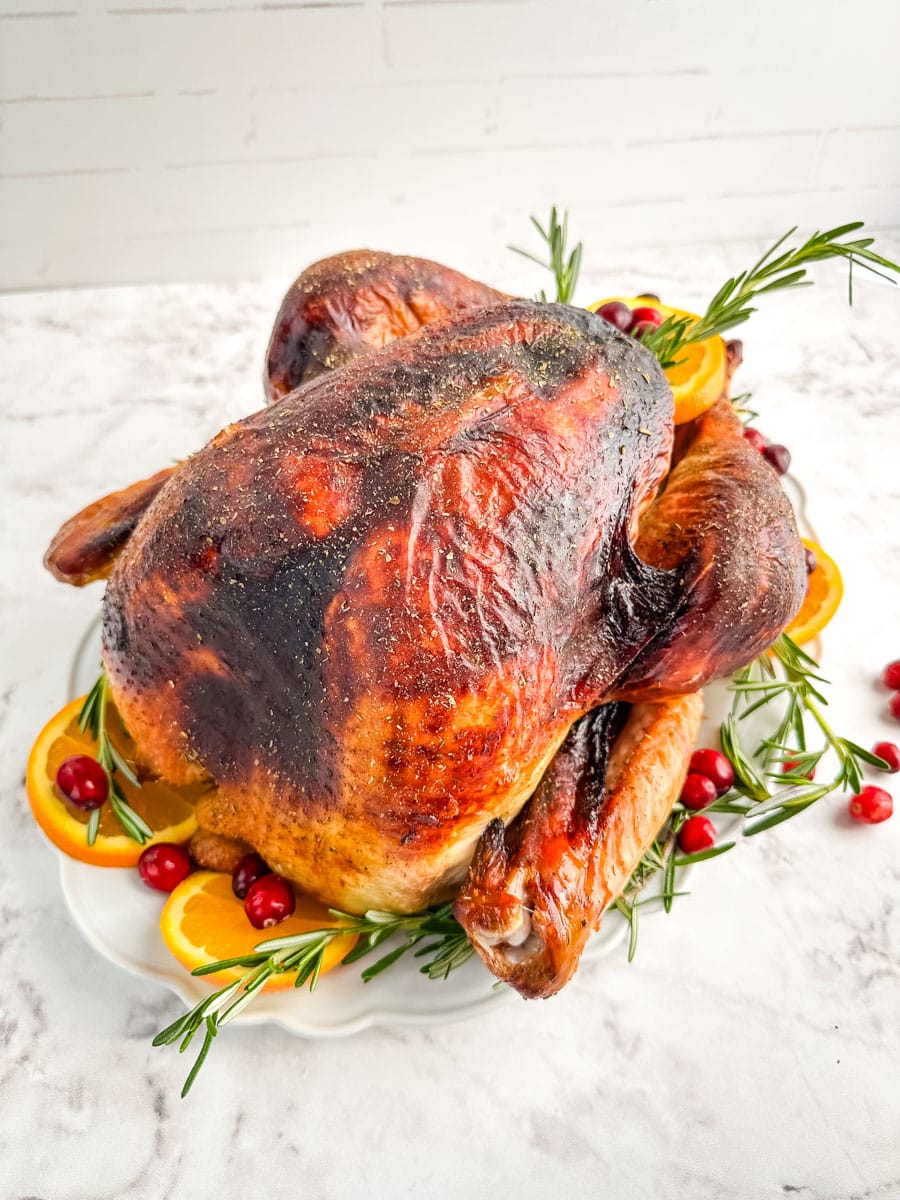
Looking for the best turkey brine recipe? You’re in the right place! I’ve roasted dozens of holiday turkeys, and brining is the one step I never skip. It’s the easiest way to get a juicy, well-seasoned bird.
Below are all of my tested turkey brines in one place: a simple salt and brown sugar brine, my reader-favorite apple cider brine, a bright citrus herb brine, and an easy dry brine. I’ll help you compare them side by side and pick the right one for your turkey, your fridge and your schedule.
My Turkey Brine Recipes at a Glance
Every one of these brines makes a juicy, flavorful turkey. The difference is flavor, time and how much fridge space you have. Here’s how they compare.
| Basic Brine | Apple Cider Brine | Citrus Herb Brine | Dry Brine | |
|---|---|---|---|---|
| Method | Wet | Wet | Wet | Dry rub |
| Flavor | Clean, savory, lightly sweet | Warm, lightly sweet, fall spices | Bright orange, herby, less sweet | Savory, rosemary and orange zest |
| Key ingredients | Kosher salt, brown sugar, peppercorns, bay | Apple cider, brown sugar, cinnamon, star anise | Orange juice, rosemary, sage, cloves | Kosher salt, rosemary, orange zest, allspice |
| Brine time | 12–24 hours | 18–24 hours | 18–24 hours | 1–3 days |
| Fridge space | Large (bag in a pan) | Large | Large | Small (roasting pan only) |
| Skin | Golden; air-dry for crisp | Golden; air-dry for crisp | Golden; air-dry for crisp | Crispiest |
| Best for | First-timers, a blank slate | Classic Thanksgiving, smoking | Less-sweet palates, Christmas | Small fridges, crispy skin |
Basic Turkey Brine (Salt and Brown Sugar)
If you’ve never brined a turkey before, start here. It’s just salt, brown sugar, peppercorns and bay leaves, so the turkey tastes like a really well-seasoned turkey. It’s also a great base if you want to add your own herbs. The full recipe card is at the bottom of this post.
Brine time: 12–24 hours · Best for: first-timers, roasting, smoking
Jump to Recipe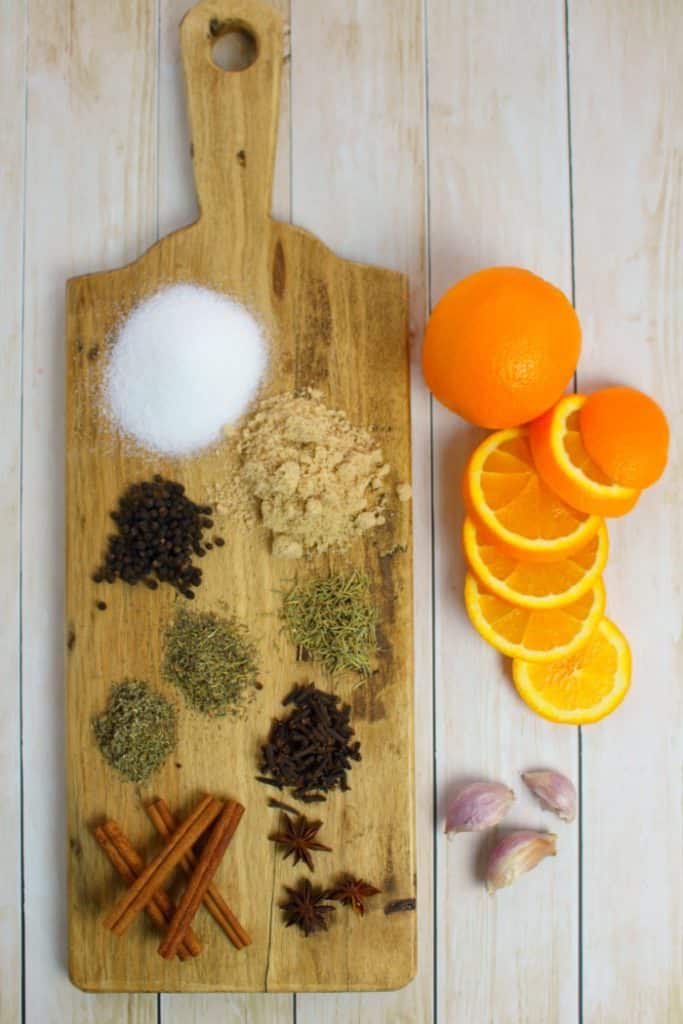
Apple Cider Turkey Brine (the Reader Favorite)
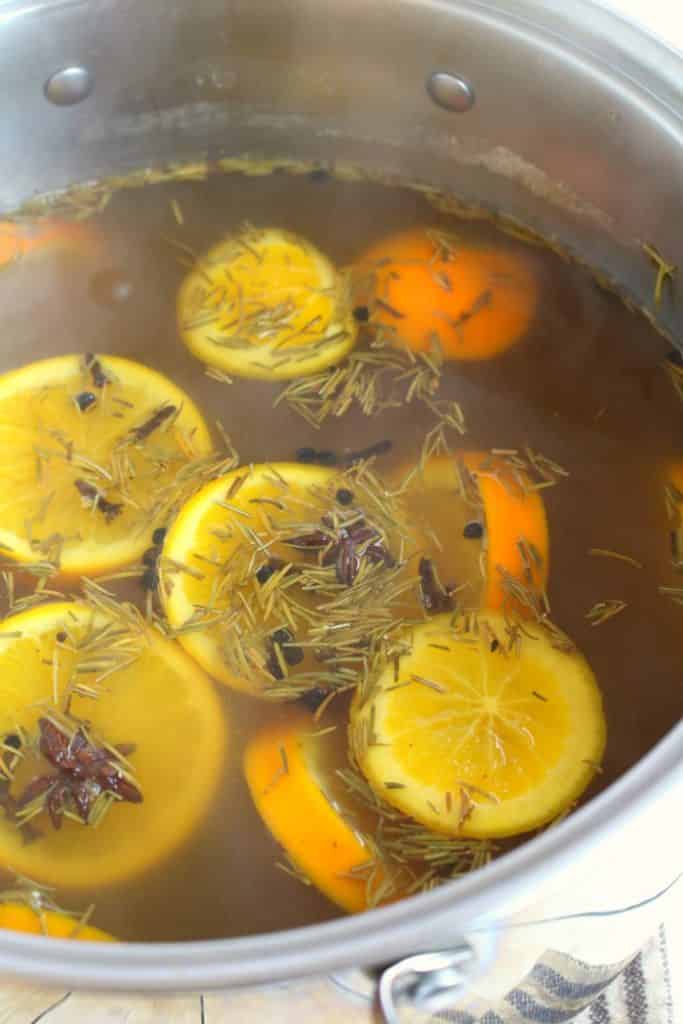
This is my most-made turkey recipe, with 127 ratings and counting. Apple cider, brown sugar, oranges and warm spices give the turkey a subtle, cozy fall flavor that tastes like Thanksgiving. It’s also fantastic for smoked turkey.
Brine time: 18–24 hours · Best for: classic Thanksgiving, smoking

Citrus Herb Turkey Brine (Bright and Less Sweet)
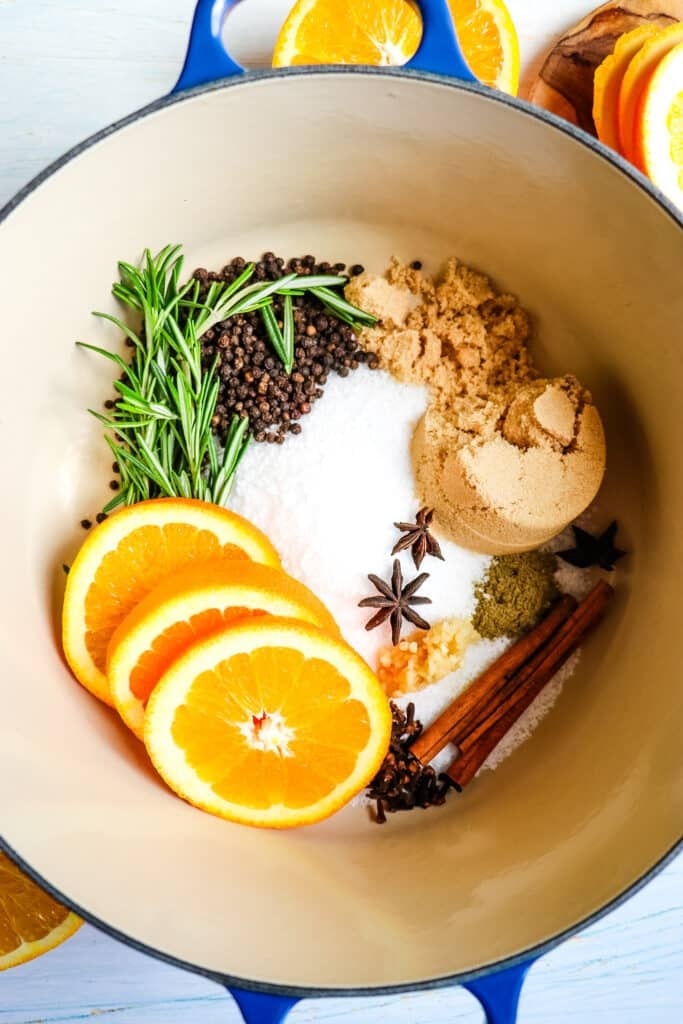
Orange juice, fresh rosemary and sage make this brine brighter and a little less sweet than the cider version. It’s a great choice for Christmas dinner, or when the stores are sold out of apple cider the week of Thanksgiving.
Brine time: 18–24 hours · Best for: less-sweet palates, Christmas
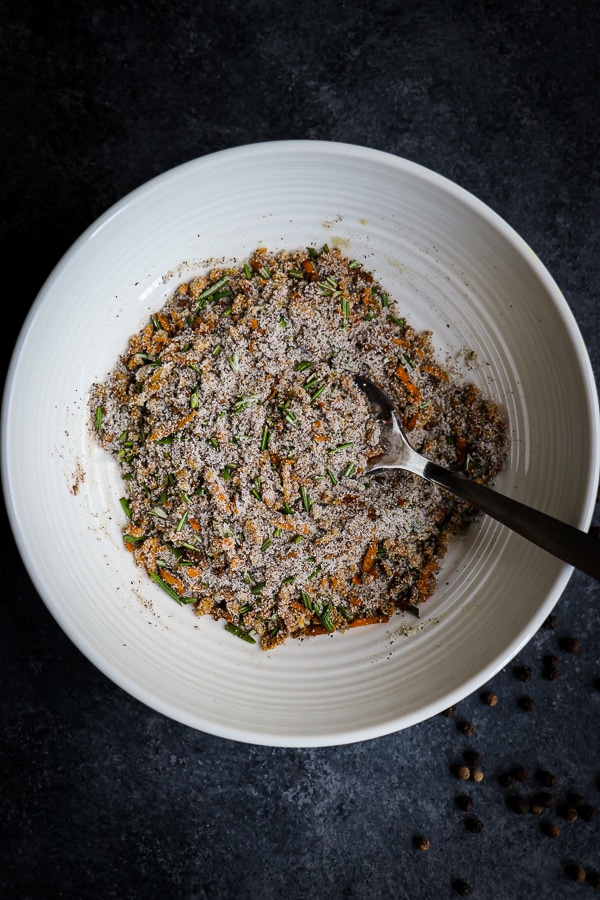
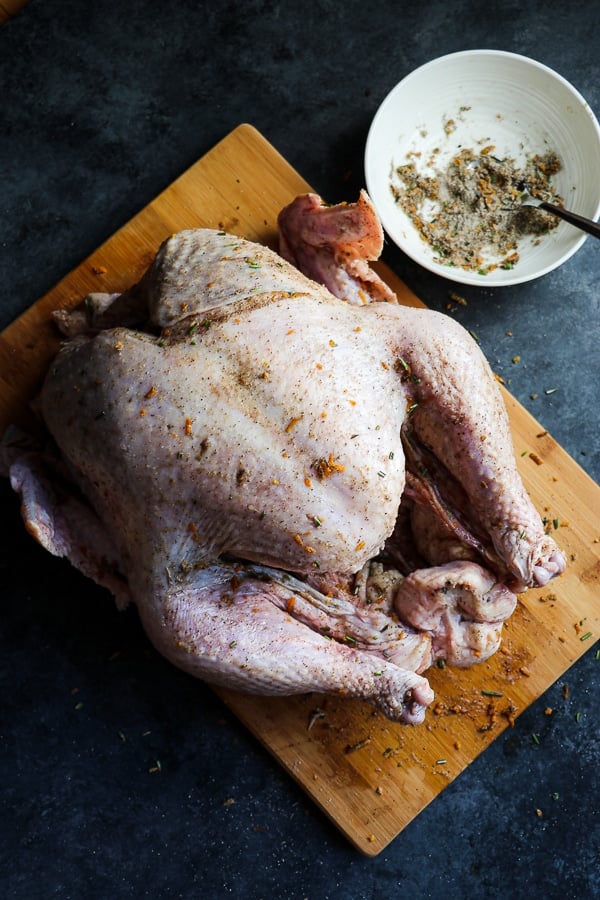
Dry Brine Turkey (No Brine Bags or Buckets, Crispiest Skin)
No bag, no bucket, no gallons of liquid. You rub a simple mix of kosher salt, rosemary, orange zest and allspice all over the turkey and let it rest in the fridge. It takes up the least space and gives you the crispiest skin.
Brine time: 1–3 days · Best for: small fridges, crispy skin
Wet Brine vs. Dry Brine: Which Is Better?
Both methods work the same basic way. Salt seasons the meat all the way through and helps it hold on to moisture while it roasts, so you get a juicier turkey. The difference is whether that salt comes in a liquid or gets rubbed right on the bird.
What Is a Wet Brine?
A wet brine is a salty, lightly sweet liquid that the turkey soaks in for 12 to 24 hours. It’s the classic method, and the liquid is a great way to add flavor, like apple cider, orange juice, herbs and spices. The trade-off is space: you need a large brining bag, a pan underneath it, and room in the fridge (or a cooler full of ice) for a turkey plus about a gallon and a half of brine.
What Is a Dry Brine?
A dry brine is kosher salt mixed with herbs and seasonings, rubbed all over the turkey. The turkey then rests in the fridge for 1 to 3 days. There’s no liquid to manage, so it takes up only as much room as your roasting pan. Because the skin isn’t sitting in liquid, it roasts up crispier.
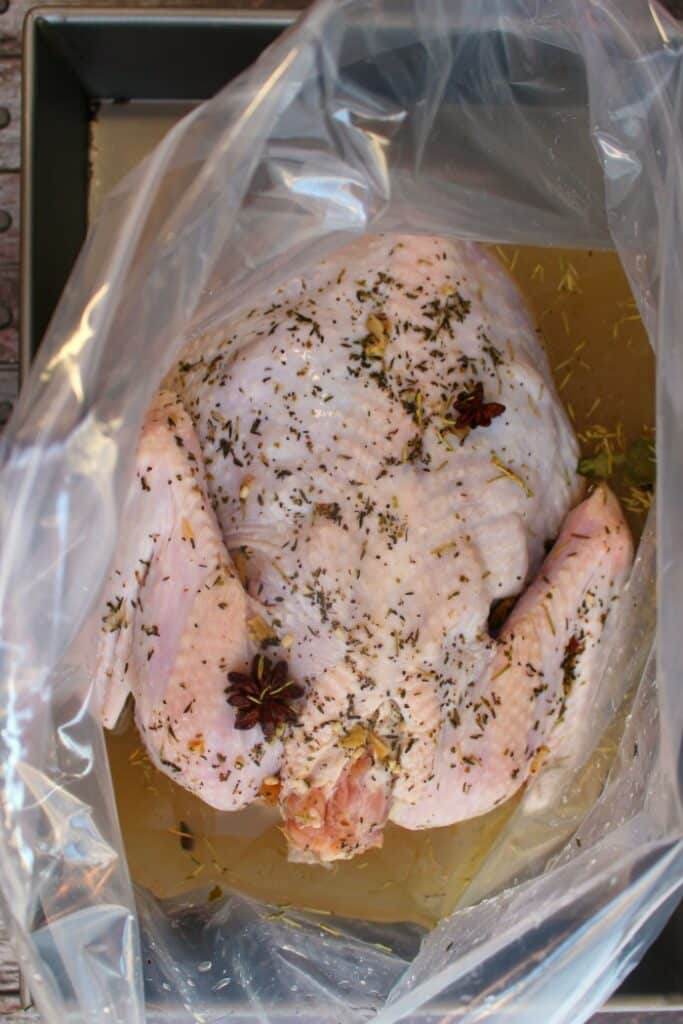
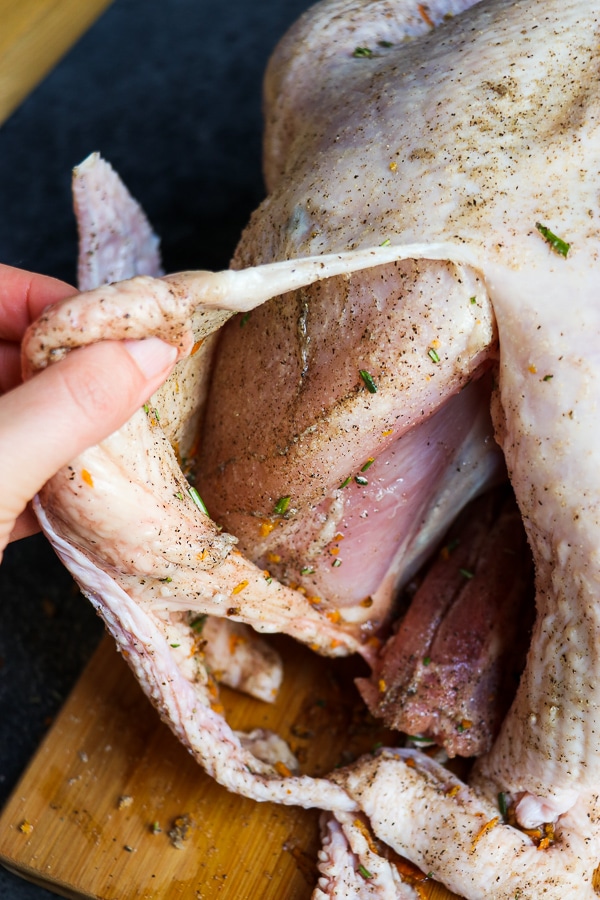
| Wet Brine | Dry Brine | |
|---|---|---|
| Fridge space | A lot (bag + pan, or a cooler) | Just a roasting pan |
| Time | 12–24 hours | 1–3 days |
| Skin | Golden, softer unless air-dried | Crispiest |
| Flavor options | Many (juice, cider, herbs, spices) | Herbs, zest and spices only |
| Mess | More (lifting and draining liquid) | Very little |
My honest pick: If you have the fridge space and want to add flavor, go with a wet brine. My apple cider brine is the one I make most years. If your fridge is packed, or crispy skin is your top priority, the dry brine wins every time.
How to Choose the Right Turkey Brine
Still not sure? Start with your fridge and your schedule, then pick the flavor.
- Never brined a turkey before? Make the Basic Turkey Brine. It’s simple and hard to mess up.
- Short on fridge space? Go with the Dry Brine Turkey. No bag, no bucket.
- Want classic fall flavor, or smoking your turkey? Make the Apple Cider Turkey Brine.
- Prefer something brighter and less sweet? Try the Citrus Herb Turkey Brine.
- Starting less than a day before dinner? Use a wet brine. A dry brine needs at least a full day to work.
- Want the crispiest skin possible? Dry brine, or wet brine followed by an overnight air-dry in the fridge.
Turkey Brining Basics (for Any Recipe)
These tips apply whichever brine you choose. Get these right and your turkey will turn out juicy every time.
Start with a Thawed, Unbrined Turkey
Your turkey should be fully or mostly thawed before it goes into a brine. A few ice crystals in the cavity are fine. Thaw it in the fridge, allowing about 24 hours for every 4 to 5 pounds.
Check the label before you buy. If it says kosher, “enhanced,” self-basting, or “contains a solution,” the turkey has already been salted. Skip the brine, or it will be too salty.
Keep Everything Cold
The brine should be completely cold, under 40°F, before the turkey goes in. Never pour warm brine over a raw turkey. The fastest way to cool a wet brine is to dissolve the salt and sugar in a small amount of hot water, then add the rest as cold water or ice.
The turkey has to stay cold the whole time it brines. Use the fridge, or a cooler packed with ice that you check and top off regularly.
Measure Your Salt Carefully
Not all kosher salt measures the same. A cup of Morton kosher salt holds nearly twice as much salt as a cup of Diamond Crystal, so swapping one for the other cup-for-cup can make your turkey too salty. My recipes use Morton’s kosher salt.
Pat Dry Instead of Rinsing
When brining is done, take the turkey out, discard the brine, and pat the turkey dry with paper towels. The USDA recommends against rinsing raw poultry because it splashes bacteria around your sink and counters. For extra-crispy skin, let the turkey sit uncovered in the fridge for 8 to 12 hours before roasting.
Roast to 165°F
Brined turkeys often cook a little faster, so start checking early. The turkey is done when an instant-read thermometer reads 165°F in the thickest part of the thigh, without touching the bone. For my full roasting method, see how to roast a brined turkey.
What You Need to Brine a Turkey
You don’t need much, but the right brining bag makes a big difference.
- Brining bag — a thick, heavy-duty bag made for brining. Don’t use an oven bag! It’s much thinner and will likely leak.
- Large stockpot or Dutch oven — to dissolve the salt and sugar.
- Roasting pan — set the bagged turkey in it in the fridge, just in case of a leak.
- Large binder clips or chip clips — to keep the bag sealed tight.
- Cooler and ice — if there’s no room in the fridge.
- Instant-read thermometer — for checking the brine temperature and knowing exactly when the turkey is done.
This post may contain affiliate links. Delightful E Made is a participant in the Amazon Services LLC Associates Program, an affiliate advertising program designed to provide a means for us to earn fees by linking to Amazon.com and affiliated sites.
For a dry brine, you only need a small bowl, a roasting pan and plastic wrap.
Easy Ways to Change Up Your Brine
Once you’ve made a brine or two, it’s easy to make it your own. These add-ins work in any of the wet brines above. Keep the salt amount the same and just add flavor.
- Warm spice: a tablespoon of whole allspice berries or a few juniper berries.
- Fresh herbs: swap sage for thyme, or add a big handful of fresh rosemary sprigs.
- Fruit: sliced apples, pears or lemons.
- Sweetness: swap part of the brown sugar for maple syrup or honey.
- A little heat: a few slices of fresh ginger or a pinch of red pepper flakes.
- Aromatics: a quartered onion or a whole head of garlic, halved.
Want to swap the liquid? That’s where my other recipes come in. Use the apple cider brine for cider or apple juice, or the citrus herb brine for orange juice.
Thanksgiving Turkey Brine Timeline
The key to a stress-free Thanksgiving is working backward from Thursday. Here’s when to start each step for a 12 to 16 pound turkey, with Thanksgiving on Thursday, November 26.
| Day | Wet brine | Dry brine |
|---|---|---|
| Thu–Fri, Nov 19–20 | — | Move the frozen turkey to the fridge to thaw |
| Sun, Nov 22 | Move the frozen turkey to the fridge to thaw | Keep thawing |
| Mon, Nov 23 | Keep thawing | Pat dry and rub on the dry brine (3 days) |
| Tue, Nov 24 | Make the brine and chill it overnight | Turkey rests in the fridge (or start the dry brine today for 2 days) |
| Wed, Nov 25 | Morning: turkey goes into the brine | Turkey rests in the fridge |
| Thu, Nov 26 | Morning: remove, pat dry, roast | Unwrap and roast |
Want extra-crispy skin on a wet-brined turkey? Brine it Tuesday morning, take it out Wednesday morning, pat dry, and let it air-dry uncovered in the fridge overnight.
Turkey Brine FAQ
Yes! Brining is the easiest way to get a juicy, flavorful turkey, especially for lean breast meat that dries out easily. It takes a few minutes of prep and some fridge time. My readers agree. One wrote, “Best turkey I’ve ever made, hands down,” and another said, “A chef told me it was the best turkey he ever had. EVER.”
Neither is better. They’re just different. Wet brine adds more flavor from the liquid but takes a lot of fridge space. Dry brine gives crispier skin and takes almost no space, but needs at least a day. See the comparison table above to choose.
For a wet brine, 12 to 24 hours for most whole turkeys. A dry brine will need 1 to 3 days. For a detailed chart by turkey size, see my brine times by turkey size.
Yes. A wet-brined turkey left much longer than 24 hours can turn salty and slightly spongy. I wouldn’t go past 36 hours.
No. Kosher, “enhanced” and self-basting turkeys have already been salted. Brining them again will make the meat too salty. Check the label for words like “contains a solution.”
I recommend patting it dry instead. The USDA advises against rinsing raw poultry because it can spread bacteria around your kitchen. Patting dry also gives you crispier skin.
The turkey should be thawed or mostly thawed before brining, so the brine can reach the meat. A few ice crystals inside the cavity are fine.
Absolutely. Make a half batch of any wet brine and brine a 4 to 7 pound turkey breast for 6 to 12 hours. It’s perfect for a smaller gathering. Try it with my slow cooker turkey breast.
The drippings may be a little saltier than usual. To be safe, make your gravy with half drippings and half low-sodium chicken stock, and taste before adding any salt.
Skip the salt, since the brine has already seasoned the meat. Brush the skin with olive oil or melted butter for a golden color. Pepper and fresh herbs are fine to add.
What to Serve with Your Brined Turkey
Your turkey is set! Round out the table with a few of my favorite Thanksgiving sides.
- Ruth’s Chris Sweet Potato Casserole
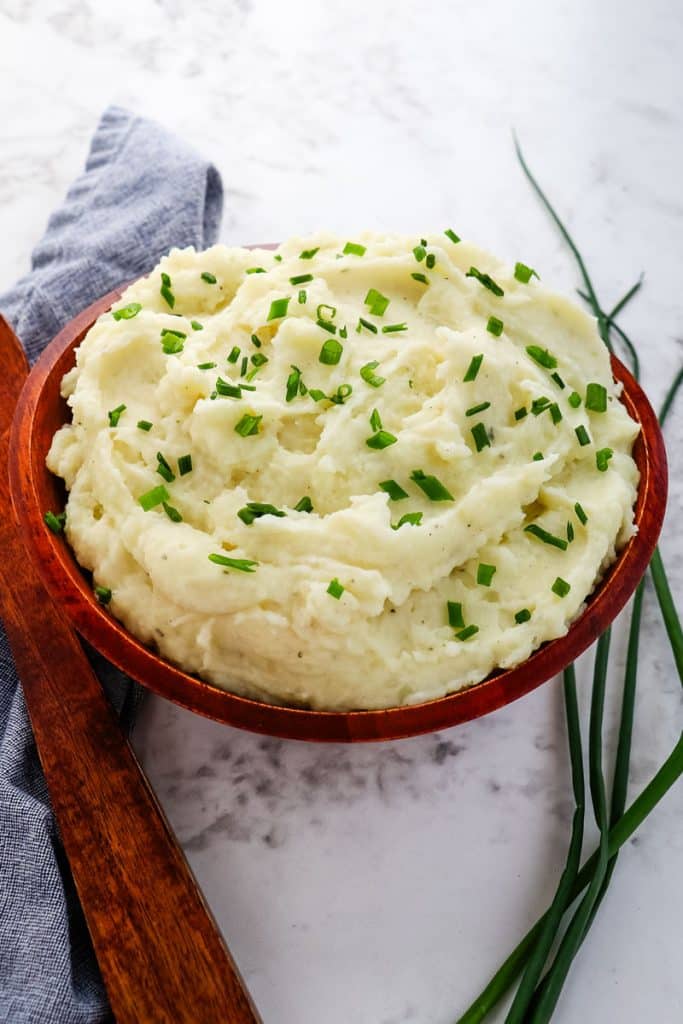
- Boursin Mashed Potatoes
- Healthy Green Bean Casserole
- Hasselback Sweet Potatoes
- Honey Balsamic Brussels Sprouts
- Cranberry Fluff Salad
- Creamed Corn Casserole
- Hot Mulled Apple Cider
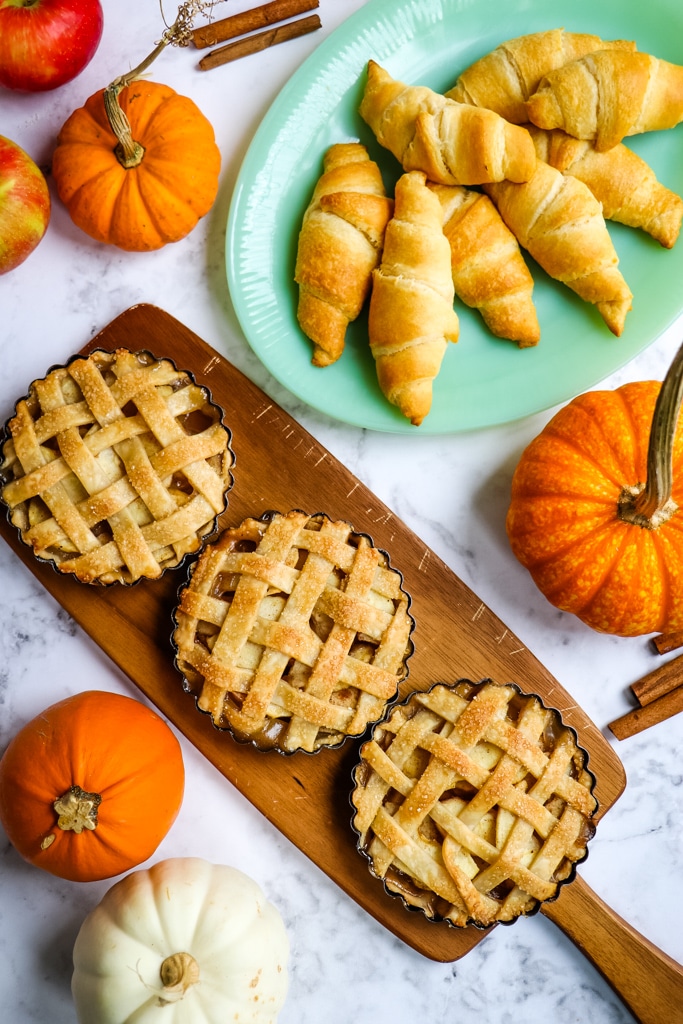
- Apple Pie Tarts
- Coconut Cream Pie with Meringue
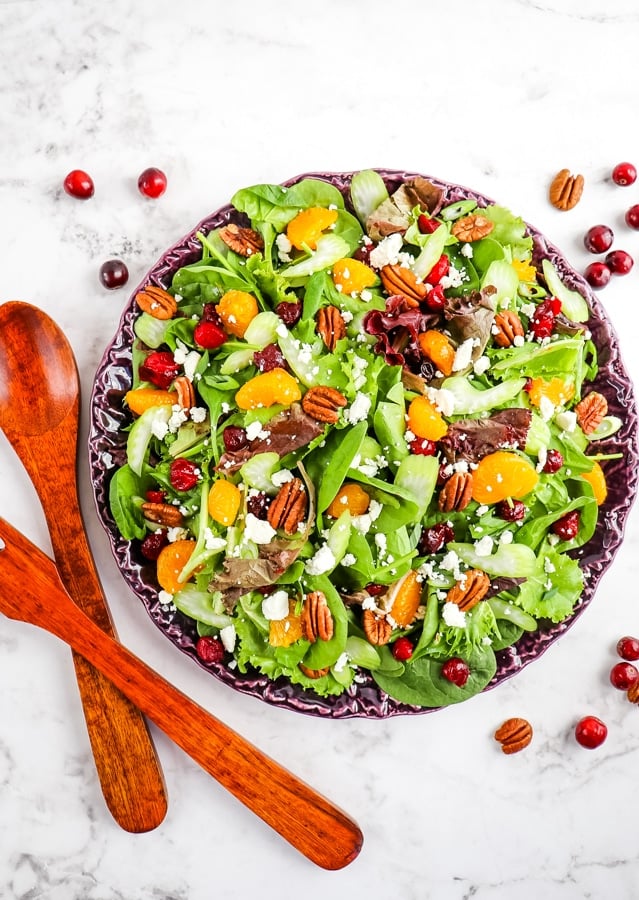
- Cranberry Citrus Salad
My Basic Turkey Brine Recipe
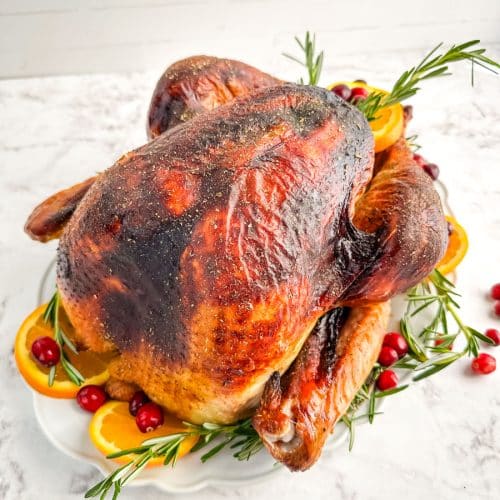
Here’s my go-to simple turkey brine, made with just kosher salt, brown sugar, peppercorns and bay leaves. It’s the perfect place to start if you’re brining your first turkey.
Want to Save This Recipe?
Enter your email & I’ll send it to your inbox. Plus, get great new recipes from me every week!
By submitting this form, you consent to receive emails from Delightful E Made.
Basic Turkey Brine (Salt and Brown Sugar)
Equipment
Ingredients
- 4 cups water for dissolving
- 1 cup Diamond Crystal kosher salt or ½ cup plus 1 tablespoon Morton kosher salt
- ½ cup packed brown sugar light or dark
- 2 tablespoons whole black peppercorns
- 4 bay leaves
- 4 cloves garlic smashed (optional)
- 4-5 sprigs fresh thyme or rosemary optional
- 5 quarts cold water or a mix of cold water and ice
- 1 whole turkey 10–20 lbs, thawed, giblets and neck removed
Instructions
- Dissolve the salt and sugar. In a large stockpot, combine the 4 cups of water, kosher salt, brown sugar, peppercorns, bay leaves, and the garlic and herbs if using. Heat over medium-high, stirring, just until the salt and sugar dissolve, about 5 minutes. It doesn't need to boil.
- Chill the brine. Remove the pot from the heat and stir in the 5 quarts of cold water and ice. Stir until the brine is completely cold, under 40°F. If it's still warm, refrigerate it until cold. Never pour warm brine over a raw turkey.
- Bag the turkey. Set a large brining bag inside a roasting pan. Place the turkey in the bag, breast side down.
- Brine. Pour the cold brine over the turkey, including the aromatics. Press out as much air as you can, seal the bag and secure it with clips. Refrigerate for 12 to 24 hours.
- Pat dry. Remove the turkey from the bag and discard the brine. Pat the turkey dry inside and out with paper towels. For the crispiest skin, refrigerate it uncovered on a rack for 8 to 12 hours.
- Roast. Brush the skin with olive oil or melted butter. No extra salt is needed. Roast until an instant-read thermometer reads 165°F in the thickest part of the thigh.
Notes
- Salt: Kosher salt brands measure very differently. Use 1 cup of Diamond Crystal or ½ cup plus 1 tablespoon of Morton (about 140 g either way). If using table salt, use about ½ cup.
- Metric: 140 g kosher salt, 110 g brown sugar, about 5.7 liters total water.
- Turkey size: For a turkey breast or a bird under 10 lbs, make a half batch and brine 6 to 12 hours. For a turkey over 20 lbs, make 1½ batches so the bird is fully covered.
- Make ahead: Make the brine up to 3 days ahead and keep it covered in the fridge.
- No fridge space? Put the bagged turkey in a cooler and surround it with ice. Check that it stays below 40°F and add ice as needed.
- Pre-brined turkeys: Skip the brine for kosher, “enhanced” or self-basting turkeys. They’re already salted.
- Gravy: Use half drippings and half low-sodium chicken stock, then taste before salting.
- Want more flavor? Try my Apple Cider Turkey Brine, Citrus Herb Turkey Brine or Dry Brine Turkey.

Speak Your Mind